
Closing Costs on Rental Property Loans: What Investors Need to Know in 2026
Most real estate investors focus on the purchase price, the rate, and the down payment. Closing costs are the number that shows up later and surprises you.
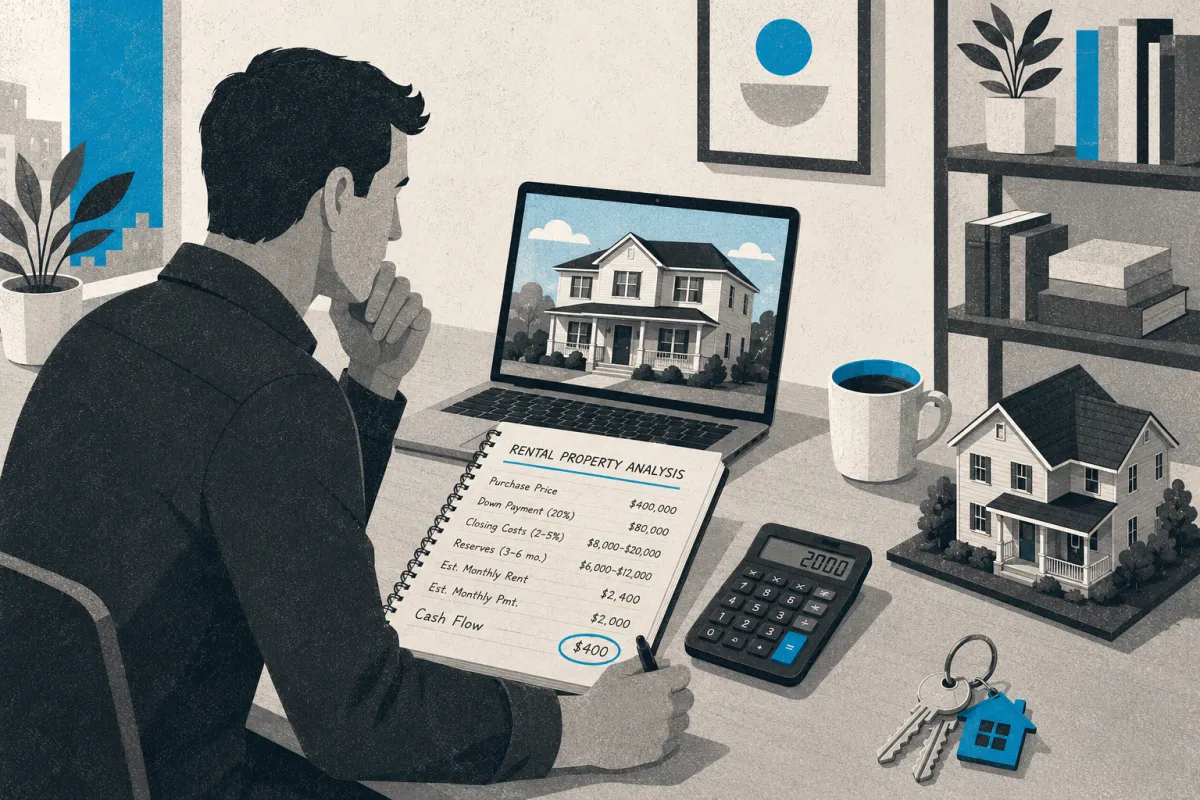
On a rental property loan in 2026, expect to pay 2% to 5% of the loan amount at closing. On a $400,000 investment property, that's $8,000 to $20,000 on top of your down payment. As the CFPB notes, closing costs are separate from your down payment. Both are due at the same time, which catches a lot of first-time investors off guard.
The good news: you have options for how to handle it. The key is understanding what those options actually cost you, not just today, but over the life of the deal.
What Closing Costs Actually Include on a Rental Property Loan
Closing costs on investment properties aren't identical to what you paid when you bought your home. They're a collection of fees from the lender, third parties, and prepaid expenses that all come due at the same time.
Here's what's typically in the pile:
Lender fees are what the mortgage company charges to process and fund your loan. This includes an origination fee (usually 0.5% to 1.5% of the loan amount), an underwriting fee ($400 to $800), and a processing fee ($300 to $600). On investment property loans, these tend to run a little higher than on a primary home loan because lenders price in the additional risk.
Third-party fees cover the people outside the lender who are involved in the transaction. The appraiser who values the property, the title company that checks the ownership history, and any attorneys required in your state. Appraisals on investment properties cost more than on primary residences. If you're buying a short-term rental or a multi-unit building, expect to pay even more here.
Prepaid items and reserves are what catches people off guard. Prepaid items are expenses you pay upfront before they're due, like the first year of homeowner's insurance or a few months of property taxes. Reserves are cash the lender requires you to keep in your bank account after closing — typically three to six months of your total monthly payment. You don't spend reserves at closing, but they need to be sitting there. On a property with a $2,000 monthly payment, that's $6,000 to $12,000 that stays in your account and can't go toward the next deal.
Can You Roll Closing Costs Into the Loan?
Yes, sometimes. But it depends on the loan type, the lender, and how much of the property value you're already borrowing against.
Here's the simple version: every lender has a maximum they'll lend relative to what the property is worth. That's called the loan-to-value ratio (LTV). If you're borrowing 80% of the property's value for the purchase, and your lender caps at 80%, there's no room to add more without crossing the limit.
If there is room under that cap, some lenders will let you add the closing costs to your loan balance instead of paying them out of pocket at closing. You're not avoiding the costs — you're financing them, same as you financed the purchase price.
On investment property loans and DSCR loans, most lenders cap borrowing at 80% of the property's value on purchases. Refinances are typically capped lower, around 75% if you're pulling cash out.
Not every lender offers this option. Checking upfront is worth the conversation.
A Quick Note on DSCR Loans
DSCR stands for Debt Service Coverage Ratio. It sounds complicated but the idea is simple: instead of qualifying based on your personal income and tax returns, the loan qualifies based on whether the rental property makes enough money to cover its own mortgage payment.
If the property brings in $2,200 per month in rent and the mortgage payment is $1,800 per month, the property is covering its own costs with money left over. Most lenders want to see that ratio at 1.0 or higher, meaning rent covers the payment. Though some programs will work with lower ratios if you put more down.
DSCR loans are popular with investors because they don't require W-2s, pay stubs, or personal tax returns. They also allow you to close in the name of an LLC, which many investors prefer for legal protection.
Closing costs on DSCR loans run in the same 2% to 5% range, sometimes slightly higher because of the specialized nature of the product.
The Real Trade-Off: Pay Now or Pay More Over Time
This is the decision most investors don't think through carefully enough.
Rolling closing costs into your loan means you don't need as much cash upfront. If you're building a portfolio and want to preserve capital for the next deal, that's a real reason to consider it.
But it's not free. Every dollar you roll into the loan gets charged interest for as long as you hold that loan. At a 7.5% interest rate, an extra $10,000 added to your loan balance costs you roughly $70 more per month. Over 30 years, that $10,000 in closing costs ends up costing you about $25,000 when you add up the interest.
If you plan to sell or refinance within a few years, that long-term interest cost matters a lot less. The shorter your hold time, the more it makes sense to roll costs in and preserve cash. The longer you plan to hold, the more it's worth paying costs upfront if you can.
One thing to watch: rolling closing costs into your loan increases the monthly payment. On a DSCR loan, that higher payment affects whether the property qualifies. If the rent just barely covers the original payment, adding more to the loan balance could push it below what the lender requires. Run the numbers before you commit.
Other Ways to Handle Closing Costs
Rolling costs into the loan isn't the only move. A few others worth knowing:
Seller credits. When you're making an offer on an investment property, you can sometimes negotiate for the seller to cover part of your closing costs. This is called a seller concession. Investment property loans typically cap these at 2% of the purchase price, but even 2% can meaningfully reduce what you're paying out of pocket.
Lender credits. Instead of paying costs upfront, you accept a slightly higher interest rate and the lender uses that extra margin to cover your closing costs. You pay nothing at closing, but your monthly payment is a little higher for the life of the loan. This works well for investors with a shorter hold period who'd rather keep cash free.
Shopping lenders. This one gets underused. Lender fees vary significantly from one company to the next. An origination fee that runs 1.5% at one lender might be 0.75% at another. On a $400,000 loan, that's a $3,000 difference. Working with a broker who can compare offers across multiple lenders gives you visibility into that spread before you commit.
What to Know Before You Close
A few numbers worth having in your head before you start deal analysis:
Closing costs on rental property loans run 2% to 5% of the loan amount. On a $320,000 loan (80% of a $400,000 property), that's $6,400 to $16,000.
Investment property interest rates in 2026 run higher than primary home rates — typically 0.5% to 1.5% above. DSCR loans range from roughly 6.75% to 8.25% depending on your credit score, down payment, and how strong the property's rental income is.
Reserves are separate from closing costs but due at the same time. Plan for three to six months of your monthly payment to sit untouched in your account after closing.
The easiest way to get an accurate number before you're under contract is to get a quote. It just takes a conversation.
Are you running numbers on a rental deal?
Connect with a Dwell pro now. We work across 30+ investors to find the right program for your deal and your budget so there are no surprises at the closing table.
FAQ
Can you roll closing costs into a rental property loan?
Sometimes. If you're borrowing less than the lender's maximum loan-to-value limit, the extra closing costs can be added to the loan balance. Most investment property programs cap at 80% of the property's value on purchases. If you're already at 80%, there's no room to add more. Not every lender offers this option, so confirm before counting on it.
What's a DSCR loan in plain terms?
It's a rental property loan that qualifies based on the property's rental income instead of your personal income. If the rent covers the mortgage payment, you can qualify — even without W-2s or tax returns. Most lenders want the rent to equal or exceed the monthly payment.
How much do closing costs run on an investment property in 2026?
Plan for 2% to 5% of the loan amount. On a $300,000 loan, that's $6,000 to $15,000. DSCR loans and short-term rental properties tend to sit toward the higher end of that range.
What are reserves and why do lenders require them?
Reserves are cash you keep in your bank account after closing — usually three to six months of your monthly payment. The lender wants to see you have a cushion in case the property sits vacant or an unexpected expense comes up. You don't spend reserves at closing. They just need to be there.
What's the difference between a seller credit and a lender credit?
A seller credit is money the seller agrees to contribute toward your closing costs as part of the deal negotiation. A lender credit is when your lender covers closing costs in exchange for a slightly higher interest rate. Both reduce what you pay at closing. Both have a cost attached over time.