
Modular vs. Manufactured Homes: What Buyers Need to Know Before Choosing
Modular. Manufactured. Most buyers treat them like they mean the same thing. They don't.
Both are built in a factory. Both cost less than a traditional site-built home. But the difference between the two, in how they're built, how they're financed, and how they hold value, is real enough to change the outcome of your purchase.
Here's what you need to know.
How They're Built
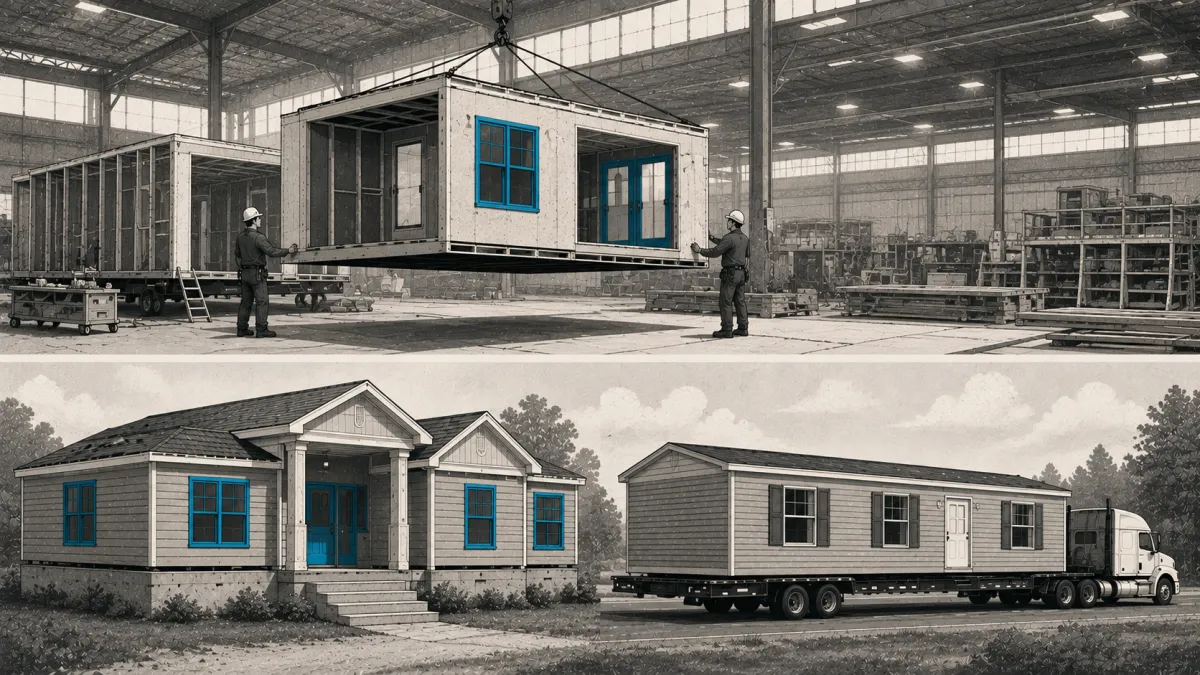
Modular homes are constructed in sections inside a factory, then transported to a site and assembled on a permanent foundation. Once set, they're treated exactly like a site-built home. Same local building codes, same permitting, same appraisal process.
Manufactured homes however are built completely inside a factory on a steel chassis, wheels and axles included, then transported to a site as a finished unit. They follow federal HUD standards instead of local codes and can be placed on private land or in a manufactured home community.
One thing worth knowing upfront: if a home was built before June 15, 1976, it's technically a mobile home under federal law. That date matters. Lenders care about it a lot.
Construction Standards: Why the Code Difference Matters
Modular homes meet the same local and state codes as any house built on-site. They get inspected at the factory and again after installation. In most states, they're legally indistinguishable from stick-built homes once they're set.
Manufactured homes follow the federal HUD Code, a rigorous standard covering design, construction, energy efficiency, and fire resistance. It's not a lesser standard. It's just a different one. And that difference shows up in how lenders and appraisers treat the property.
Tip: Look for a HUD certification label on the exterior. That small metal plate tells you the home was built to federal code after June 15, 1976. Lenders look for it. Appraisers look for it. If it's not there, most government-backed financing won't be available.
Appreciation: The Honest Answer
Modular homes appreciate comparably to site-built homes. They're real property, they sit on permanent foundations, and they're appraised the same way. Location drives value, same as any house.
Manufactured homes are more complicated. It depends on two things: whether you own the land, and how the home is titled.
A manufactured home permanently affixed to owned land, with the title properly converted to real property, can appreciate meaningfully. That's especially true in markets where affordable housing is scarce, which is increasingly a lot of markets.
A manufactured home on leased land, or still titled as personal property, tends to depreciate over time. It behaves more like a vehicle than a house. That's not a reason to avoid it. But it's something to go in knowing.
Foundation and title status aren't just paperwork. They determine whether your home builds equity or loses it.
The Financing Breakdown: Why It Actually Decides Everything
This is where buyers get surprised. So let's be direct about it.
Modular homes finance exactly like site-built homes. Conventional, FHA, VA, USDA — all of it.
Actually, let's pull that one too:
Modular homes finance exactly like site-built homes. Conventional, FHA, VA, USDA. All of it applies, no restrictions. If you qualify for a mortgage on a regular house, the same mortgage works here.
Manufactured homes have more conditions attached.
The 2026 conforming loan limit is $832,750 for most counties, same as site-built. Getting there depends on what the home sits on and how it's titled.
Conventional financing requires a permanent foundation, real property title, and Fannie Mae or Freddie Mac eligibility. Most lenders want a 700 or higher credit score for manufactured homes, which is a higher bar than conventional financing on site-built homes. Homes without the right foundation and title won't qualify here.
FHA runs two separate programs. FHA Title II treats the home as real property. It needs to be permanently affixed to land the buyer owns, built after June 15, 1976, with its HUD label intact. Down payment can be as low as 3.5% with a 580 credit score. FHA Title I is for manufactured homes on leased land, like in a mobile home park. These are personal property loans, not real estate loans. Down payment requirements are similar but loan amounts cap lower.
VA loans work for eligible veterans when the home was built after June 15, 1976, sits on a permanent foundation on owned land, and is titled as real property. Maximum terms run 25 years for larger units. Not every lender offers this. Shopping across multiple lenders matters more here than on a standard VA purchase.
Chattel loans apply when a manufactured home doesn't qualify for real property financing. The home is treated as personal property, similar to a vehicle loan rather than a mortgage. Rates are higher. Terms are shorter. Equity builds differently. They're a legitimate option in some situations, but know what you're getting into before committing to a home that requires one.
Which One Makes Sense for You
If you want a home that finances, appreciates, and resells like a traditional house, modular is the cleaner path. Fewer conditions, familiar financing, same appraisal process.
If you're looking at a manufactured home, answer these three questions before you make an offer. Is it on a permanent foundation? Will you own the land? Has the title been converted to real property, or can it be? If all three are yes, your financing options look a lot like a regular mortgage. If any are no, you're looking at higher rates, shorter terms, and a different resale picture.
Neither is a wrong choice. They're different tools for different situations. The right one depends on your finances, your timeline, and what you're trying to build.
FAQ
Can I get a conventional loan on a manufactured home?
Yes, if the home is on a permanent foundation, titled as real property, and meets Fannie Mae or Freddie Mac standards. Most conventional lenders require a 700 or higher credit score for manufactured homes. If those conditions aren't met, FHA Title I or a chattel loan are the alternatives.
What is a HUD label and why do lenders require it?
The HUD certification label is a small metal plate on the exterior confirming the home was built to federal HUD Code standards after June 15, 1976. Without it, FHA, VA, and conventional financing aren't available. It's not negotiable.
What's the difference between a chattel loan and a real estate mortgage on a manufactured home?
A real estate mortgage treats the home as real property. Equity builds, rates are lower, and terms are longer. A chattel loan treats the home as personal property. Rates run higher, terms are shorter, and equity builds differently. Chattel loans apply when the home isn't on owned land or hasn't been converted to real property status.
Can a veteran use a VA loan on a manufactured home?
Yes. The home must be built after June 15, 1976, on a permanent foundation, on land the veteran owns, and titled as real property. Maximum term is 25 years. Not every lender offers VA manufactured home loans, so comparing options across multiple lenders matters here.
Do manufactured homes appreciate?
It depends on land ownership and title status. Manufactured homes on owned land, permanently affixed, and titled as real property can appreciate alongside site-built homes, especially in tight affordable housing markets. Homes on leased land or titled as personal property typically don't.
Questions about financing a modular or manufactured home?
Dwell works with 30+ lending partners and has access to conventional, FHA, VA, and specialty manufactured home programs across all nine states we're licensed in. Connect with a Dwell pro and we'll show you exactly what's available for your situation. No runaround.