
HELOC Guide for Homeowners: How to Use Your Home Equity the Smart Way
You own a home. Which means you probably have a financial tool sitting in your walls right now that you're not using.
It's called a HELOC. And in 2026, with the average rate down to around 7.16%, it's one of the most useful things a homeowner can access.
Here's exactly how it works, what it costs, and when it makes sense.
What is a HELOC?
A Home Equity Line of Credit is a revolving credit line secured by your home. Think of it like a credit card — except instead of your credit score backing it, your home equity does. Which is why the rates are a fraction of what a credit card charges.
Here's the key difference from a regular loan: you don't take the whole amount at once. You draw what you need, when you need it, during what's called the draw period. You only pay interest on what you actually use.
The math is simple. If your home is worth $500,000 and you owe $320,000, you've got $180,000 in equity. Most lenders will let you access 80 to 85% of your home's value minus what you owe. That's your available credit line.
Current Market Context:
As of September 2026, the average HELOC rate is sitting at 7.16% — a new low for the year. Credit cards are still running 20% or more.
Here’s a real-world example: Say you need $20,000 for a kitchen renovation. On a credit card at 22%: you're paying roughly $4,400 in interest in year one alone. With a HELOC at 7.16%: that same $20,000 costs about $1,430 in interest. Same year. That's $3,000 saved. On one project. Without changing the scope, the contractor, or the plan.
Homeowners are paying attention. HELOC balances rose $13 billion in Q2 2026 — the 17th consecutive quarterly increase. When your mortgage rate is 3 or 4%, you're not touching it. A HELOC lets you pull equity without blowing up your first mortgage rate. That's the move.
One thing to understand: HELOC rates are variable. They move with the prime rate. Which means they can go up. Factor that into your plan — especially if you're borrowing a large amount over a long draw period.
What to Use It For (And What Not To)
Good uses:
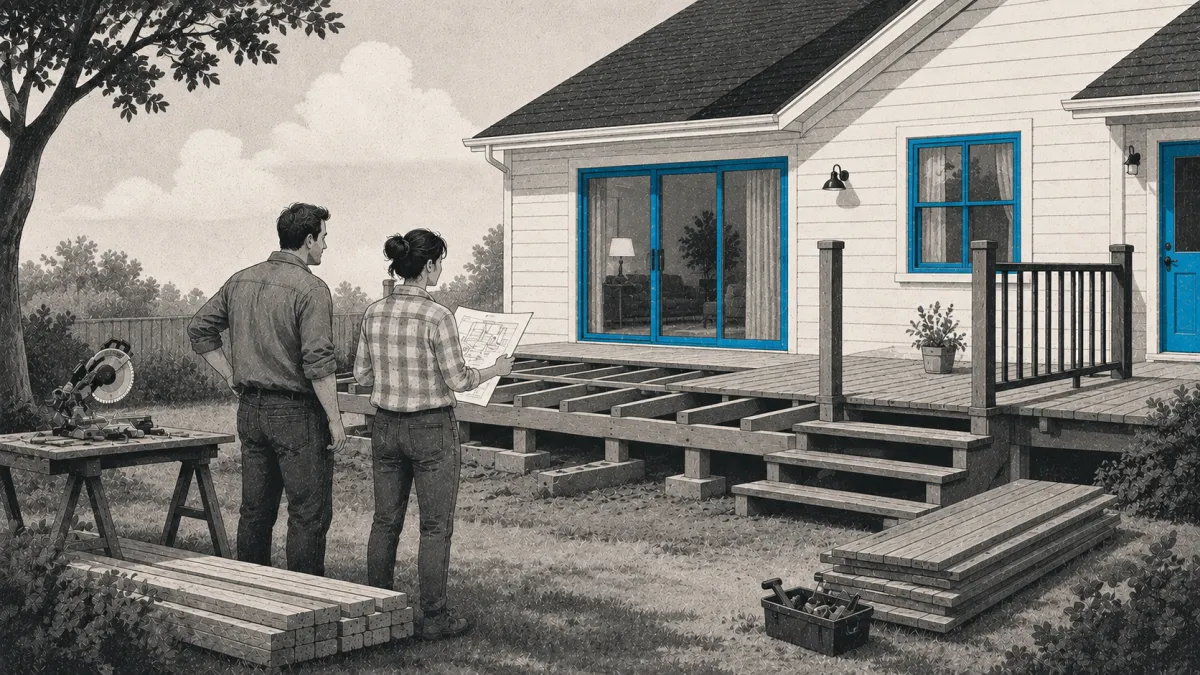
Home improvements that add equity. Kitchen updates, bathroom renovations, energy-efficient upgrades, a new roof. These projects increase your home's value while you're spending against it. That's a double win.
Debt consolidation. If you're carrying credit card balances at 20%+, rolling them into a HELOC at 7% isn't just smart — it's math. You don't spend more. You pay a lot less.
Emergency fund access. Some homeowners open a HELOC before they need it, just to have the line available. You pay nothing until you draw. But it's there if the furnace dies, the car gives out, or life gets expensive for a few months.
Where it gets complicated:
Vacations, discretionary spending, anything that doesn't build value or eliminate higher-cost debt. The HELOC rate is low relative to a credit card — but you're still borrowing against your home. That's not the same as charging a hotel room. Use it with intention.
What You Need to Qualify
Most lenders look at four things.
Home equity. You'll typically need at least 15 to 20% equity remaining after the HELOC. So if your home is worth $400,000, you need to owe no more than $320,000 to $340,000 before opening the line.
Credit score. Most lenders want 620 or above. The higher your score, the better the rate you'll get. Strong credit at 740+ can meaningfully move the needle on what you're offered.
Debt-to-income ratio. Aim for 43% or below. That means if you bring home $7,000 a month, your total monthly debt payments — including your mortgage — should be under $3,010.
Payment history. Consistent mortgage payments matter. A track record of on-time payments signals to the lender that you're a reliable bet.
One thing most people don't realize: you don't have to use the lender who holds your mortgage. Shopping across 30+ lending partners (the way Dwell works) often produces meaningfully better rates and terms than walking into your existing bank and asking.
HELOC vs. Cash-Out Refinance: Which One?
This question comes up a lot. Both access your home equity. They're not the same thing.
A cash-out refinance replaces your entire existing mortgage with a new, larger one. You get the difference in cash. The problem in 2026: if you locked in a 3% or 4% rate a few years ago, a cash-out refi trades that rate for a current market rate. You're not just borrowing — you're repricing your entire loan.
A HELOC leaves your first mortgage completely alone. Same rate, same payment. You just add a separate line on top of it.
If your current mortgage rate is below today's market, the HELOC almost always wins. You protect what you have and still access the equity. If your mortgage rate is already close to today's market, a cash-out refi may make more sense depending on how much you need and over what timeline.
Talk through both options before assuming one is right. The numbers usually make it obvious.
How to Get Started
The process is more straightforward than most homeowners expect.
Start with a quick equity assessment — what your home is worth today, what you owe, and what's potentially available. A Dwell pro can pull that together in a few minutes.
From there, you'll look at current rates across multiple lenders, get a real number for what you'd qualify for, and decide if it makes sense for your situation.
Processing typically runs two to four weeks. No reason to wait until you're in a crunch.
FAQ
Does a HELOC affect my existing mortgage?
No. A HELOC is a separate second lien. Your first mortgage — its rate, its payment, its terms — stays exactly as it is.
Is HELOC interest tax deductible?
It can be, when the funds are used to buy, build, or substantially improve the home that secures the loan. If you're using it for debt consolidation or other purposes, the deduction generally doesn't apply. Talk to your tax advisor — the rules are specific and worth understanding before you draw.
What happens when the draw period ends?
Most HELOCs have a draw period of 10 years, followed by a repayment period of 10 to 20 years. During repayment, you can no longer draw from the line and start paying both principal and interest. Know your timeline going in.
Can I open a HELOC before I need it?
Yes — and many homeowners do exactly that. The line stays open and available. You pay nothing until you draw. It's essentially a financial safety net with no carrying cost.
What if rates go up after I open a HELOC?
Since HELOC rates are variable and tied to the prime rate, they can increase. Some lenders offer fixed-rate draw options that let you lock a portion of your balance at a set rate. Ask about that option when you're comparing lenders.